Creatine is one of the best-studied and most widely used sports supplements in the world. Decades of clinical research clearly confirm its effectiveness: consuming at least 3 g of creatine daily increases physical performance during short-term, high-intensity exercise. This is a claim approved by EFSA, which in the world of dietary supplements is an exception, not the rule.
Although the effectiveness of creatine is scientifically proven, consumers and brand owners still ask: which form to choose? Powder, capsule, tablet, sachet, stick, gummy: the market today offers creatine in almost every possible format. Each has its advantages, limitations and optimal target group.
Biveris, as a contract manufacturer of sports supplements, offers creatine in both liposomal and traditional form, in sachet, stick, doypack and jar (plastic jar) formats. Below we discuss everything worth knowing before you decide on a specific format.
Types of creatine: where to start?
Before we move on to the form, it is worth mentioning the types of creatine available on the market. The most popular and best-studied is creatine monohydrate: it is the basis of most supplements and the one on which clinical research is based. Other forms (malate, hydrochloride, buffered creatine Kre-Alkalyn) are often positioned as “improved”, but their advantage over monohydrate has not been unambiguously confirmed by science.
Liposomal creatine is a separate category: a form in which creatine molecules are enclosed in phospholipid liposomal shells. Liposomal technology protects creatine from degradation in the digestive system and may improve its absorption. It is a premium format that stands out from standard monohydrates and lets a brand build a narrative based on technological innovation.
Forms of creatine: what to choose and for whom?
Powder (sachet, stick, doypack, plastic jar)
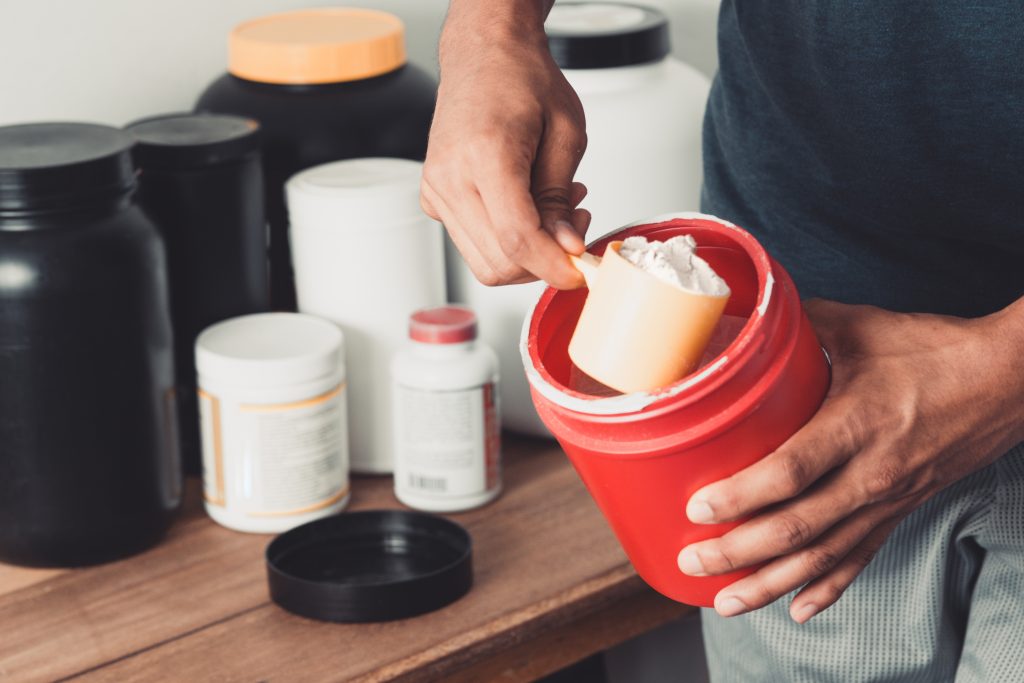
Powder is the classic and still the most popular creatine format among advanced athletes. The main advantage is the dose: a single sachet or scoop can easily hold 3–5 g of creatine. Powder is easy to mix with water, juice or a protein shake, which fits the training routine of most active people.
The packaging format matters here both for marketing and for function:
Sachet is a single portion, ready to take to training or on a trip. It requires no weighing or scoop: the consumer opens it and drops it into a bottle. It is a convenience format that is increasingly replacing large jars in the premium segment.
Stick is an even more compact version of the sachet: it fits in a sports jacket pocket or a runner’s belt. Ideal for active consumers who train in different places and value mobility.
Doypack (a stand-up pouch with a closure) is a multi-portion pack that can be opened and closed repeatedly. Popular in the CrossFit and gym segment: the consumer measures a portion with a scoop and stores the rest. A good format for brands targeting advanced users.
Plastic jar is the classic packaging known from the shelves of sports stores and gyms. It is associated with a traditional sports supplement, is cheap to produce and displays well on a shelf. It works for large amounts of product (e.g. 500 g or 1 kg of monohydrate).
Biveris offers production of creatine in sachet, stick, doypack and plastic jar formats, in both liposomal and traditional form. Check our ready-made formulations in the sport nutrition category.
ODT tablet (Orally Dissolving Tablet)
An ODT tablet is an innovative format that dissolves in the mouth in a few seconds: no water, no mixing, no scoop. It is a particularly practical solution during training at the gym, outdoors or at competitions, where access to water and a shaker is limited.
Absorption through the oral mucosa partly bypasses the digestive system, which may speed up the transport of creatine to the muscles. It is a format that naturally communicates innovation and makes the product stand out on the shelf.
Biveris produces creatine in ODT form in the Handy Creatine formulation: creatine in an ODT tablet, 4000 mg per serving (2 tablets), available in the sports supplements category. It is a product created with active people in mind who value convenience with no compromise on quality.
Capsule
Creatine capsules are a format that works for consumers who prefer the classic form of supplementation: no mixing, no taste, no powder. The limitation is the capacity of the capsule, which at a typical dose of 3–5 g of creatine means taking 4–6 capsules a day. For some consumers it is a drawback, for others it makes no difference.
Gummy
Creatine gummies are a novelty on the market that is gaining popularity especially among younger consumers and people who do not like swallowing tablets or mixing powder. The limitation is the dose: it is hard to fit more than 500–750 mg of active substance in a gummy, which means having to consume more portions. It is a more lifestyle-oriented format than a performance-oriented one.
Liposomal vs traditional creatine: what to choose for your brand?
This is a question asked by more and more brand owners. The answer depends on the product positioning and the target group.
Traditional creatine (monohydrate) is the choice for brands targeting the mass sports market: well known, proven, price-competitive. Consumers know monohydrate, trust it and know what to expect. It is a business-safe choice when entering the market.
Liposomal creatine is the choice for premium brands that want to stand out through technology and build a narrative based on innovation. The higher production price translates into a higher retail price and higher margins, provided the marketing communication is right. It is a format for conscious consumers who are looking for something more than standard powder from a jar.
Biveris offers both options. If you want to configure a creatine product under your own brand, use the Supplement Configurator or contact our team directly.
FAQ: creatine, form and format
Does the form of creatine affect its effectiveness?
Creatine monohydrate is the best-studied form and the reference point for all research. Other forms may offer better stomach tolerance or higher bioavailability (such as the liposomal form), but the basic mechanism of action, saturating phosphocreatine in the muscles, is common to all forms.
How much creatine a day is enough?
According to EFSA, consuming 3 g of creatine daily increases physical performance during intense exercise. Some users apply a so-called loading phase (20 g a day for 5–7 days), after which they move to a maintenance dose of 3–5 g. Both strategies are effective: the loading phase speeds up muscle saturation, but it is not necessary.
Can creatine be combined with magnesium?
Yes, and it is a physiologically justified combination. Magnesium is a cofactor of creatine kinase, the enzyme responsible for rebuilding ATP from phosphocreatine. Biveris offers the Magnesium and Creatine formulation combining 5000 mg of liposomal creatine with 200 mg of liposomal magnesium in a green apple flavored sachet.
Is creatine in a sachet better than creatine in a jar?
In terms of composition and action, there is no difference. A sachet is a convenience format (single portion, convenience, no scoop), a jar is an economical, mass-market format. For a premium brand, a sachet or stick helps justify a higher retail price.
Can I order creatine under my own brand at Biveris?
Yes. Biveris produces creatine on a contract basis in both liposomal and traditional form, in different packaging formats. Contact our team or use the Supplement Configurator to discuss the details of your project.