The dietary supplement market offers dozens of ways to deliver active ingredients today. For the consumer, it is a matter of convenience and preference. For the brand owner and the manufacturer, it is a strategic decision that affects production cost, target group, price positioning and the effectiveness of the product. Before you decide in what form you want to produce a supplement under your own brand, it is worth understanding how the individual formats differ and which one best meets your needs.
Biveris, as a contract manufacturer of dietary supplements, offers production in several formats. Below we discuss each of them in detail, with examples from our portfolio and tips on when to choose a given form.
Capsules: a classic on the supplement market
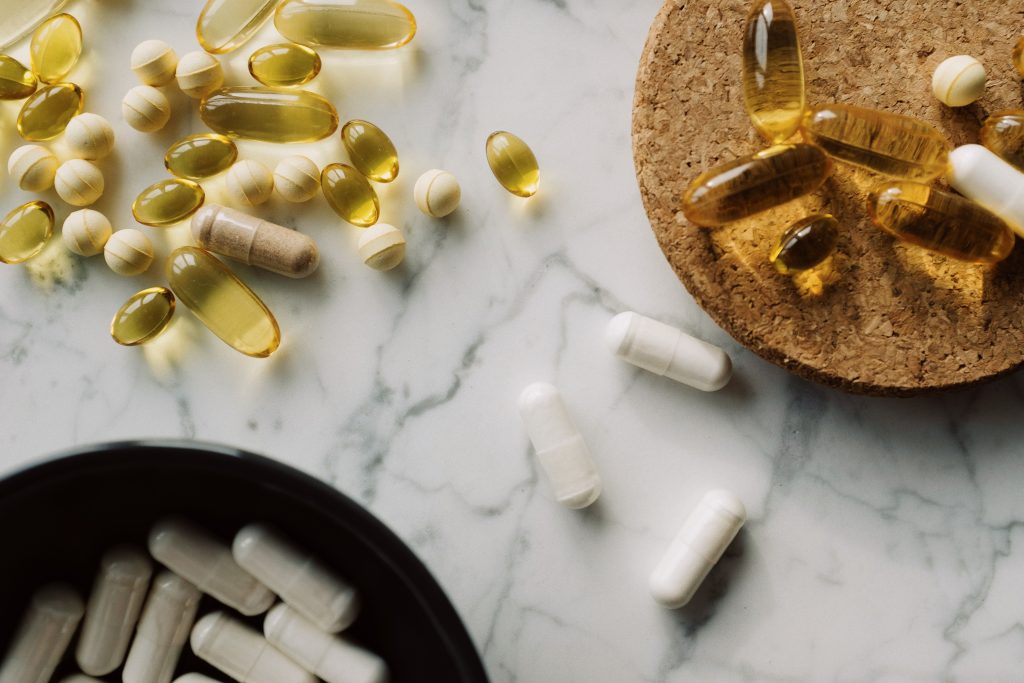
Capsules are still the most popular form of dietary supplements in the world, and not without reason: they are versatile, well known to consumers, easy to swallow and neutral in taste. Supplement manufacturers use them for a very wide range of compositions, from simple single-vitamin products to complex multi-ingredient compositions.
Hard capsules (HPMC or gelatin)
Hard capsules are a format that works well for powder and granulated compositions. HPMC (plant-based) capsules are suitable for vegans and vegetarians, which is an increasingly important marketing argument when communicating with the growing group of plant-based consumers. Gelatin capsules are cheaper to produce and just as effective for compositions that do not require vegan certification.
Hard capsules work especially well for multi-ingredient supplements: immunity-support complexes, beauty formulations, products for eye health, joints or sleep and relax. Biveris produces HPMC hard capsules in formulations such as Hair Growth Booster, Daily Care, Pre Workout, Joints Inflammation Reducer and many others.
Softgel capsules
Softgels are capsules with a liquid or semi-liquid content, ideal for fat-soluble ingredients such as vitamin D3, K2, omega-3 or coenzyme Q10. They have higher bioavailability than tablets for lipid ingredients and mask the intense taste of some fish or plant oils well. It is a premium format that works well in the vitamins and minerals segment and in supplements for seniors.
Sachets: the fastest-growing format
A sachet is a single portion of powder in a sealed pack. It can be dropped into water or juice, or drunk directly. It is the format that has grown fastest in recent years, especially in the beauty and longevity, sport and wellness segments.
Why does the sachet win?
First of all, the dose. A sachet can hold much more active substance than a capsule, for example 5000–10,000 mg of collagen, 5000 mg of creatine, a full set of electrolytes or 500 mg of glutathione. A capsule has a limited capacity of around 500–700 mg of total content. A sachet practically has no such limit.
Second, taste. The powder in a sachet can be designed as a pleasant drink: lime, coconut, lychee, strawberry or red beetroot flavor. This translates into higher compliance (regularity of use) and higher consumer satisfaction, which builds loyalty to the brand in the long term.
Third, the premium format. A sachet communicates innovation and higher quality than a standard capsule, which helps justify a higher retail price. In the beauty and sport nutrition segments, consumers are ready to pay clearly more for convenience and good taste.
Biveris specializes in sachets with agglomerated powder. The agglomeration technology ensures excellent solubility without sediment, even in cold water. Products available in this form include Collagen Lychee, Collagen Plus, Electrolytes with Coconut Water, Magnesium and Creatine, Post Workout, Liposomal Glutathione and Liposomal Magnesium. If you are interested in producing supplements in a sachet, check our ready-made formulations or configure your own product in the Supplement Configurator.
Sticks: the pocket-sized sachet
A stick is a narrow, elongated pack with a single portion of powder, more compact than a classic sachet. It fits in a sports jacket pocket, a runner’s belt, a key case or a car compartment. It is a format particularly popular in Asia that is quickly gaining popularity in Europe, especially in the sports supplements and electrolytes segment.
A stick and a sachet are really the same product in a different packaging format: the composition, production technology and action are identical. The difference is only ergonomics and user experience. For a brand, a stick is also a differentiator on the shelf: the narrow format is instantly recognizable and associated with a modern, active lifestyle.
Tablets: tradition with flexibility
Tablets are cheaper to produce than capsules and allow precise dosing. It is a format that dominated the supplement market for decades and still has a strong position, especially in the mass-market and pharmacy segments. There are several variants:
Coated tablets
The coating masks the taste and smell of ingredients, protects substances sensitive to moisture and stomach acids, and improves the look of the product. It is a good choice for ingredients with an intense taste or smell, such as iron or some plant extracts.
Effervescent tablets
Great for higher doses of vitamin C, electrolytes or magnesium. A pleasant form for consumers who do not like swallowing tablets, especially popular in the vitamins and minerals segment and in supplements for seniors.
ODT tablets (Orally Dissolving Tablets)
This is one of the more innovative formats: the tablet dissolves in the mouth in a few seconds without the need to drink water. It is especially valuable when the active ingredient can be absorbed through the oral mucosa, which increases its bioavailability and speeds up its action. This mechanism is particularly beneficial for vitamin B12 and creatine. Biveris produces in this form, among others, B12 Booster and Handy Creatine, supplements from the sport nutrition and vitamins categories.
Gummies: supplements that people enjoy eating
Pectin gummies are a format that has exploded in popularity in recent years, especially in the segments of supplements for children, beauty and wellness. Consumers simply like them more than tablets or capsules, and this translates into higher compliance and loyalty to the brand.
Pectin gummies (without animal gelatin) are suitable for vegans and vegetarians, which is an important argument when positioning a product as plant-based. The limitation of the format is capacity: large doses of active ingredients cannot be placed in a gummy, and the high production temperature rules out some sensitive substances. Gummies work best with low doses of vitamins, minerals and plant extracts.
Biveris produces pectin gummies in formulations such as Blue Light Protection Kids, with ingredients supporting children’s eye health, and Apple Cider Vinegar in the weight management category.
Syrups and liquids: for those who don’t like tablets
A liquid form works especially well for supplements for children and older people who have difficulty swallowing. A syrup allows easy dosing with a measuring cup, good masking of the taste of active ingredients and fast absorption without the stage of dissolving a capsule.
Biveris produces in this form Liposomal Iron Syrup, a formulation combining liposomal iron with a rich composition of herbal extracts (thyme, coltsfoot, elderberry, rose hip), available in the vitamins and minerals category. It is a product particularly well positioned for children and older people who do not tolerate traditional iron tablets.
How to choose the supplement form for your brand?
The choice of form is a decision worth making consciously, taking into account several key criteria:
Target group. Children and older people respond better to gummies and syrups, athletes prefer sachets and sticks, and conscious premium consumers appreciate innovative formats such as ODT. Each group has its own habits and expectations regarding the supplement format.
Dose of the active ingredient. If the product requires a high dose (collagen, creatine, electrolytes, glutathione), a sachet is the only sensible choice. With low doses of vitamins and minerals, a capsule or tablet is entirely enough and cheaper to produce.
Price positioning. Sachets, sticks and gummies communicate higher value and make it possible to justify a higher price point. Tablets and capsules are an economical, mass-market format, a good choice for products aimed at a wide market.
Active ingredients. Some substances require a specific form because of stability or bioavailability: vitamin D3 in a softgel, B12 in an ODT, collagen in a sachet. Our R&D department will advise on the optimal choice for each composition.
If you do not know where to start, use the Supplement Configurator: you can pre-configure your product and get an indicative quote. You can also contact our team directly, and they will help you choose the optimal form for your project.
FAQ: supplement forms
Which supplement form is the most effective?
There is no single answer: effectiveness depends on the active ingredient and the form in which it is delivered. For collagen and electrolytes, a sachet is best (high dose). For vitamin D3, a softgel capsule. For B12, an ODT tablet with absorption through the mucosa. The key is to match the form to the composition, not the other way around.
Is a sachet more expensive to produce than a capsule?
The unit cost of a sachet is usually higher than that of a capsule, but it allows much higher doses and a higher retail price. In the premium segment, a sachet often brings a better business result despite the higher production cost.
Are pectin gummies suitable for vegans?
Yes. Pectin gummies do not contain animal gelatin and are suitable for vegans. It is important to also verify the other excipients at the stage of product implementation.
Can I order the same supplement in several forms?
Yes. Biveris can produce the same composition in different formats. It is a good solution for brands building a consistent portfolio with options for different target groups, for example a capsule for adults and a gummy for children.
How long does it take to implement a new supplement form?
With ready-made formulations from the Biveris portfolio, the implementation time is much shorter than with a recipe from scratch. With ready-made formulations, we can complete the whole process in a few weeks. We set the exact schedule individually after a consultation.